

What Happens During a Partial Compulsory Acquisition Valuation?
You open the mail and find a letter from a government authority. A road is being widened, a rail corridor is going through, or a water main needs an easement, and they want a slice of your property. It might be a strip off the front of a suburban block or a corner of a rural paddock. They aren’t taking the whole property, so surely the compensation is simple?
Not quite. A partial acquisition changes more than the land that’s taken. It can change how the rest of your property works, what it’s worth and what you can do with it. A good compulsory acquisition valuation looks at all of that, not just the square metres on the plan. It’s one example of how the different purposes of property valuation can change what a report needs to cover.
This article explains how the valuation works, what’s included and what to watch for. It’s written for owners, investors, farmers, and the solicitors and accountants who advise them.
Summary
When an authority acquires only part of your property, compensation isn’t limited to the value of the land taken. Valuers generally compare your whole property before the acquisition with what remains after it. That captures the loss in value caused by the taking.
On top of that, other items may be payable depending on your state or territory:
- special value
- severance
- injurious affection
- disturbance costs
- solatium (compensation for non-financial hardship)
- reasonable professional fees
The rules and timeframes differ between states, and some are under review, so check the current legislation for your property. Read the notice carefully and note the deadlines. Understand each head of compensation before you accept an offer, and consider getting your own independent valuation.
How a Compulsory Acquisition Valuation Works When Only Part of Your Land Is Taken
Compulsory acquisition (often called “resumption” in some states) is when a government authority takes land for a public purpose, with or without the owner’s agreement. In a total acquisition, the authority takes the lot. In a partial acquisition, you keep some of it.
Partial acquisitions are harder to value because the valuer has to answer two questions:
- What is the land being taken worth?
- What has the acquisition done to the value and usability of the land you keep?
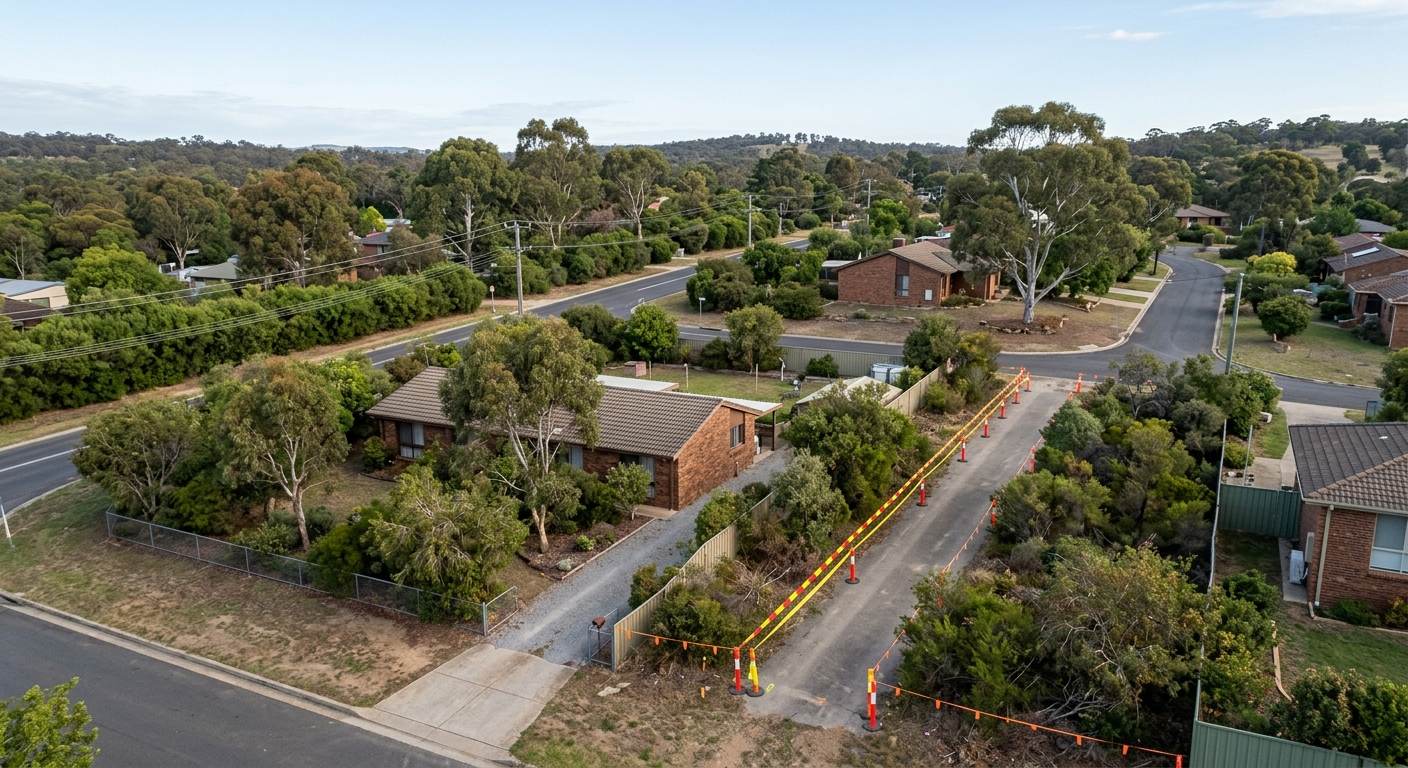
The impact of the acquisition on the remaining land has to be taken into account when working out compensation, including whether it depreciates the remaining land or increases the cost of using it. A strip taken from the front of a block might look small on paper. It can still wipe out a driveway, push a house too close to a new boundary or change the highest and best use of the site.
Market value comes first
The starting point is market value, the price a willing buyer would pay a willing seller. The value is generally assessed ignoring the effect of the project itself. In NSW, for example, the Act guarantees compensation won’t be less than the market value of the land, unaffected by the proposal, at the date of acquisition. Victoria takes a similar approach: market value is assessed on the unaffected value of the land, so the effect of the project isn’t counted.
That matters in practice. If news of a new motorway has already pushed down values on your street, the valuation shouldn’t lock in that drop.
The Partial Acquisition Valuation Process, Step by Step
The details depend on the state and the acquiring authority, but the general sequence looks like this.
- You receive an opening letter or notice. In NSW, if you can’t agree with the authority after a minimum six-month negotiation period, it can issue a Proposed Acquisition Notice, usually giving about 90 days before the acquisition proceeds.
- The authority obtains a valuation. Often this is an independent valuer inspecting your property. In Victoria, market value is assessed by an independent valuer appointed by the Valuer-General Victoria.
- You get your own valuation. This is optional but sensible. You (or your solicitor) can brief your own valuer to assess the full position, not just the market value of the land taken.
- Negotiation and claim. Both sides compare valuations and discuss the figures. In NSW, the Valuer General may determine compensation if agreement isn’t reached, and sends a preliminary valuation report before finalising. That report is your chance to give feedback.
- Compensation is determined or agreed. If you disagree with the final amount, there are dispute processes, usually through a court or tribunal. They have strict time limits, so check the deadlines on any notice you receive.
If the valuer’s report has missed an impact on your remaining land, step 3 is where you find out.
The Before-and-After Method Explained
For partial acquisitions, the usual approach is the before-and-after method. Victoria’s legislation spells it out. It requires compensation for a partial acquisition to be valued using the before-and-after method, and it’s a widely accepted approach around Australia. The valuer works out:
- the value of your whole property before the acquisition, and
- the value of what’s left after it
The difference is the starting figure for compensation.
Here’s a simple, hypothetical illustration. The numbers are made up purely to show the logic.
| Value | |
| Whole property before (say, a 1,000 sqm block with a house) | $1,500,000 |
| Remaining property after (smaller, driveway lost, house closer to the road) | $1,200,000 |
| Difference (starting point for market value compensation) | $300,000 |
The land taken might be only 150 sqm, worth far less than $300,000 on a per-square-metre basis. The extra loss comes from what the taking does to the rest of the property. That’s why valuing only the strip can leave an owner well short.
Severance and injurious affection
These terms come up constantly in partial acquisitions.
- Severance is the loss in value of your remaining land because it has been cut off or split. A farm divided in two by a rail line, with no easy way to move machinery between the halves, is the classic case.
- Injurious affection is the loss in value of your remaining land caused by the way the public project is built or used. Examples include noise, loss of privacy or loss of access.
- Betterment works the other way. It’s an increase in the value of your remaining land because of the project, such as a new interchange improving access. Depending on the state, it can be taken into account.
Where these sit in the calculation varies. In Victoria, the Court of Appeal has confirmed that the before-and-after market value includes severance and other impacts on the retained land. In NSW, they’re listed as separate heads of compensation.
What Else Can Be Compensated?
Market value is only one part. Depending on your circumstances and your state’s legislation, you may also be able to claim some of the items below.
| Head of compensation | What it generally covers |
| Market value | The value of what’s taken (or the before-and-after difference in a partial acquisition) |
| Special value | Value to you personally that goes beyond market value, such as a business that depends on the specific land |
| Severance | Loss in value of the retained land from being split or cut off |
| Injurious affection / betterment | Loss (or gain) in value of the retained land from the public works |
| Disturbance | Financial costs that flow directly from the acquisition |
| Solatium | Compensation for non-financial disadvantage |
| Professional fees | Reasonable legal and valuation costs |
A few practical notes:
- Disturbance is often read narrowly. In Victoria, it’s any pecuniary loss that is a natural, direct and reasonable consequence of the acquisition, which needs a close connection between the acquisition and the loss. Keep records of costs as you go.
- Solatium has limits in some states. In Victoria, it’s capped at 10 per cent of the land’s market value. The way that cap is calculated in a partial acquisition has been contested, so ask your solicitor how it applies to you.
- Professional fees. In NSW, reasonable valuation and legal costs connected with a compulsory acquisition may be recoverable as disturbance compensation, subject to statutory requirements and reasonableness. Confirm what’s covered in writing before you engage anyone.
- Tenants and businesses. If you lease the property or run a business from it, you may have your own claim. Tenants can be compensated where they show a financial loss as a direct result of the compulsory acquisition.
How the Rules Differ Across Australia
Compulsory acquisition law is mostly state and territory based, so the terminology, timeframes and heads of compensation aren’t the same everywhere. Some of the main pieces of legislation are:
- NSW: Land Acquisition (Just Terms Compensation) Act 1991
- Victoria: Land Acquisition and Compensation Act 1986
- Queensland: Acquisition of Land Act 1967
- Western Australia: Land Administration Act 1997
- South Australia: Land Acquisition Act 1969
- Tasmania: Land Acquisition Act 1993
The ACT, the Northern Territory and the Commonwealth have their own regimes as well.
It’s also worth knowing the rules can change. The NSW Government is reviewing the Just Terms Act and its whole-of-government acquisition processes. Don’t rely on an old article, including this one, for deadlines or entitlements. Check the current legislation and the notice you’ve been given.
Common Misconceptions About Partial Acquisitions
“They’re only taking a small strip, so the compensation will be small.”
Not necessarily. The loss in value of the rest of your property can be bigger than the value of the land taken.
“The authority’s valuation must be right.”
It’s an independent valuation, but it’s still one opinion. It’s worth checking that it covers severance, injurious affection, special value and disturbance, and not just the land taken.
“I can wait and see how it turns out.”
Notices come with deadlines for negotiation, objections and appeals. Missing one can limit your options, so it helps to understand what to do when the government wants to acquire your property as early as possible.
“Market value is what the authority says it is.”
Market value is assessed by valuers using comparable sales and accepted methods. The conclusions can reasonably differ, which is why a second opinion helps.
When an Independent Compulsory Acquisition Valuation Makes Sense
You don’t need your own valuation for every acquisition. It’s usually worth considering when:
- the taking affects access, frontage, building envelopes or development potential
- the remaining land is split, oddly shaped or hard to use
- you run a business, a farm or an investment property on the land
- the authority’s offer looks low compared to the impact on the retained land
- you’re a solicitor or accountant who needs expert evidence for a claim or negotiation
When you choose a valuer, ask whether they have experience with acquisition and compensation matters, not just standard sale valuations. Also ask what they’ll cover beyond market value, such as severance, injurious affection and special value.
FAQs
Is compensation for a partial acquisition just the value of the land taken?
No. The valuation also looks at the effect on the land you keep. Depending on your state, that can include severance, injurious affection and other heads of compensation on top of market value.
What is the before-and-after method?
It’s a way of valuing a partial acquisition by comparing the value of your whole property before the acquisition with the value of the remaining property after it. The difference is the starting point for compensation.
How long do I have to respond to a compulsory acquisition notice?
It depends on the state and the stage of the process. In NSW, the Proposed Acquisition Notice period is usually about 90 days. Read your notice carefully, note every date and speak to a solicitor early.
Can I get my own valuation, and who pays for it?
Yes, you can. In some states, authorities pay reasonable valuation and legal costs. Confirm in writing what’s covered before you engage a valuer.
What if the acquisition makes my remaining land worth more?
That’s called betterment. Depending on the state, an increase in the value of your remaining land because of the project can be taken into account. Your valuer and solicitor can explain how it applies to you.
Do tenants and business owners get compensation too?
Possibly. Tenants and businesses can have their own claims if they can show a financial loss that flows directly from the acquisition.
What’s the difference between severance and injurious affection?
Severance is the loss in value from your land being split or cut off. Injurious affection is the loss in value caused by the public works themselves, such as noise or reduced access.
Conclusion
A partial compulsory acquisition valuation isn’t just about the strip of land taken. It looks at what your whole property was worth before, what the remaining land is worth after, and the other losses along the way.
Get the process, deadlines and heads of compensation clear early, and get your own independent valuation before accepting an offer.
Need a Second Opinion on an Acquisition Offer?
If part of your property is being acquired and you’d like an independent view of the numbers, All States Property Valuers can assess the before-and-after position and the other heads of compensation, and explain the results. You can call +61 438 080 786 to talk through your situation.